Too little. Too late. Rethinking performance management.
How to turn performance management from a backward-looking process into an everyday driver of better performance.
Performance Happens Every Day
Formal reviews matter. But if feedback comes months after someone starts struggling, the chance to help may have passed.
That’s why we’ve brought together seven key ingredients that work together to give people the clarity, confidence and support they need - when it matters most.
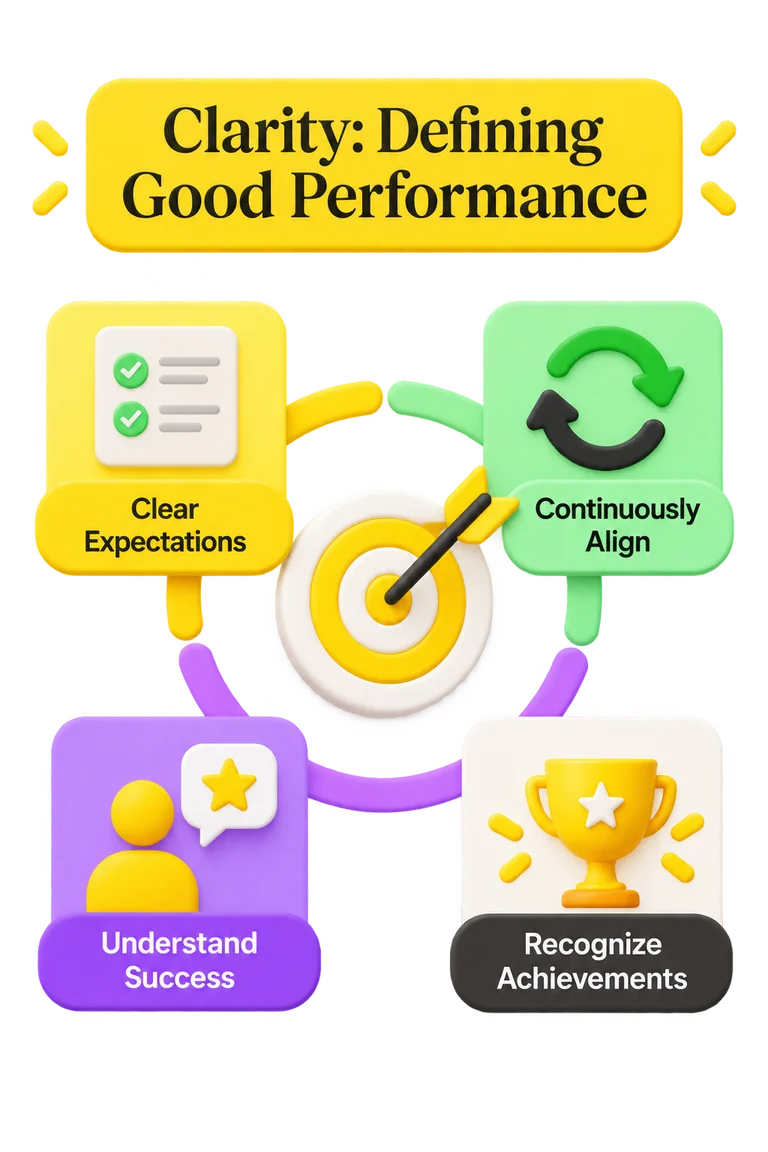
1. Clarity
People do their best work when they understand what is expected of them. That means more than setting objectives at the beginning of the year. Expectations should connect to the work happening today and evolve when priorities change. Make success visible, specific and easy to discuss.
Try this: Ask a colleague what great performance looks like in their role this week. Agree one clear sign of success you can both look for.
2. Conversations
Feedback has the greatest impact when people can still act on it. Waiting for a formal review can turn a useful coaching moment into a discussion about what went wrong. Regular conversations should explore progress, obstacles and support, not simply track tasks.
Try this: Replace one status update with three questions. Whats going well? Whats getting in the way? What would help you move forward?
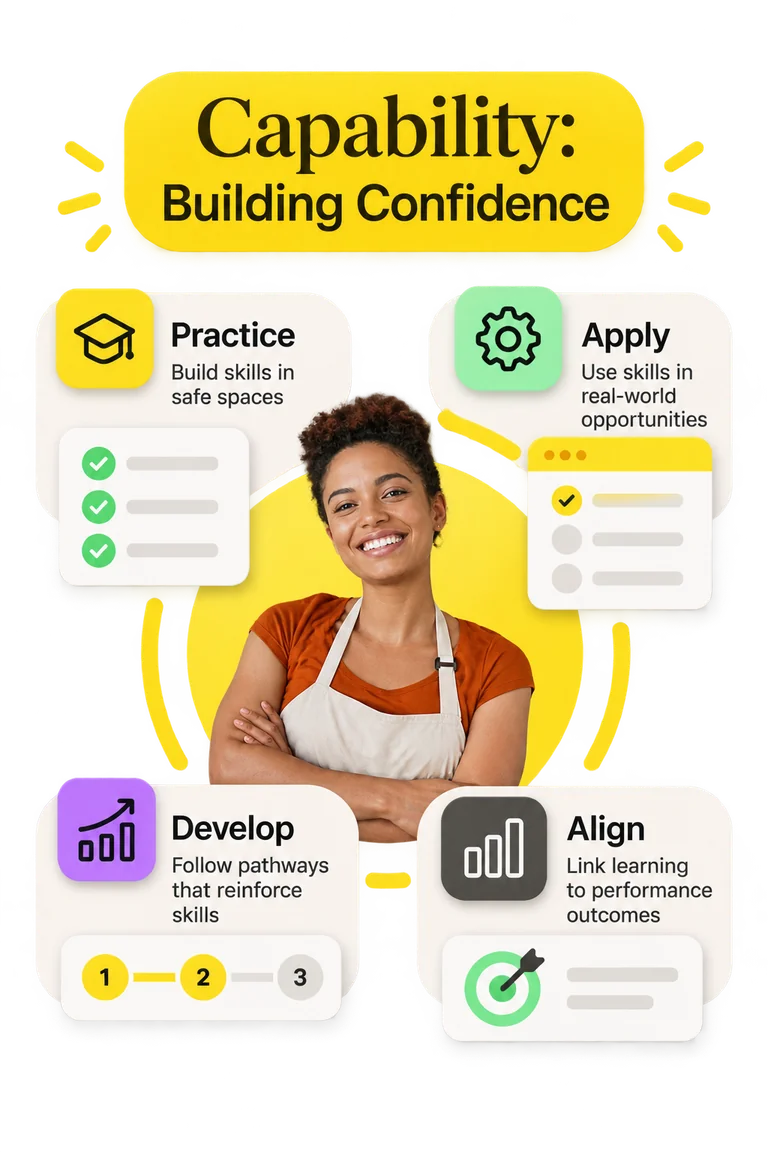
3. Capability
Spotting a skills gap is only the beginning. People need access to relevant learning, opportunities to practise and a chance to show what they can do. Imagine a colleague struggling with a difficult client conversation tomorrow. A course next month wont help much. A short guide and safe practice session today might.
Try this: Choose one upcoming challenge and give your team the tools to practise before it matters.
4. Trust
People rarely ask for help when admitting a problem feels risky. A healthy performance culture makes it safe to discuss mistakes, uncertainty and development needs without fear of immediate judgement. Trust grows through honest conversations and managers who respond constructively.
Try this: Ask someone what they find difficult in their role. Listen carefully, thank them for sharing, and agree one helpful next step together.
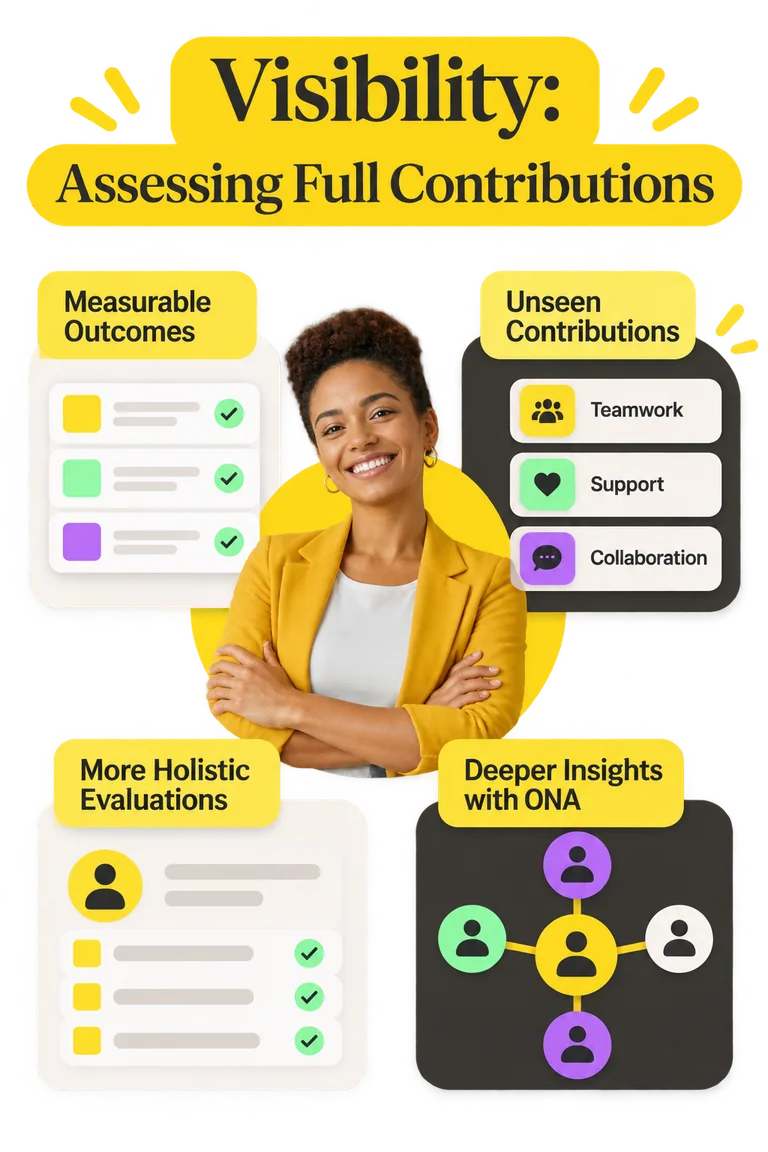
5. Visibility
Objectives and manager ratings tell only part of the performance story. Valuable contributions can also appear in peer feedback, collaboration and the informal networks that help work get done. Who do colleagues turn to for advice? Who connects teams? Network insights can add context, but should never replace judgement.
Try this: Recognise one person whose impact goes beyond their formal objectives.
6. Engagement
Engagement is more than getting people to complete a survey or participate in a process. It means listening for the signals your workforce sends about what helps them succeed and what gets in their way. Those signals may reveal problems before they appear in performance results. But listening without action can weaken trust.
Try this: Share one thing you heard and what youre doing about it.
7. Action
Clear expectations, useful conversations and better insight mean little unless something changes. When a performance gap appears, respond while improvement is still possible. Connect the person to coaching, learning, practice or practical support, then follow up to see what worked. Thats how performance management becomes an everyday habit rather than a completed form.
Try this: Choose one obstacle and remove it this week.
From Reviewing to Enabling
Great performance management happens between reviews. Listen for signals. Offer support through conversations, learning and practice. Notice what improves. When engagement, performance and learning work together, we build capability.
Choose one of the seven ingredients. What could you do today to help someone perform better tomorrow?